← Services 03 / 04
Interactive & Immersive Experiences
An exhibition has to work for a visitor who arrives mid-thought, with children pulling at both hands, and decides within seconds whether to stay.
Who it’s for
Museums and cultural institutions, technology companies and brands building something people walk into or use: exhibitions, installations, projection and branded digital experiences. The client is usually a director, curator, head of brand or product lead who needs one person to resolve content, space and technology together.
When to bring me in
When a museum, cultural institution or company is building something people physically encounter: a new permanent or temporary exhibition, an interactive gallery, a projection or video-mapped piece, a public installation, a visitor centre, a spatial or XR experience.
The right moment is while the content and the space are still being argued about. Once the screens are specified, the interesting decisions are already gone.
The problem being solved
Two failures are common. In the first, the technology becomes the exhibit: an impressive system that visitors use once, photograph, and learn nothing from. In the second, rigorous content is simply transcribed onto screens, and the subject, which is genuinely interesting, reads as homework.
The work is to find the form in which the material becomes something a visitor wants to explore, and then to make the technology disappear behind it.
What I offer
- The experience concept: what a visitor does, in what order, and what they leave with
- The visual language: illustration, graphic design, animation, 3D and the environment it all lives in
- Art direction across every surface: projection, touchscreen, sound-guided space, physical graphics
- Work with curators, content experts and scientific advisers so the material stays accurate while it becomes accessible
- Direction of technology partners and developers, so the interaction serves the story rather than demonstrating itself
- Adaptation of the design to the architecture, its light, its acoustics and its constraints
How the team is assembled
Installed experiences are multidisciplinary by definition. Depending on the piece, that has meant illustrators, designers, animators, 3D artists, developers, technology and integration partners, curators and subject-matter experts working in parallel. Depending on the project, I lead the concept and visual language or contribute art direction and design within a wider team; where a project already has a technical integrator or an exhibition designer, I work into that structure rather than replacing it.
Selected work
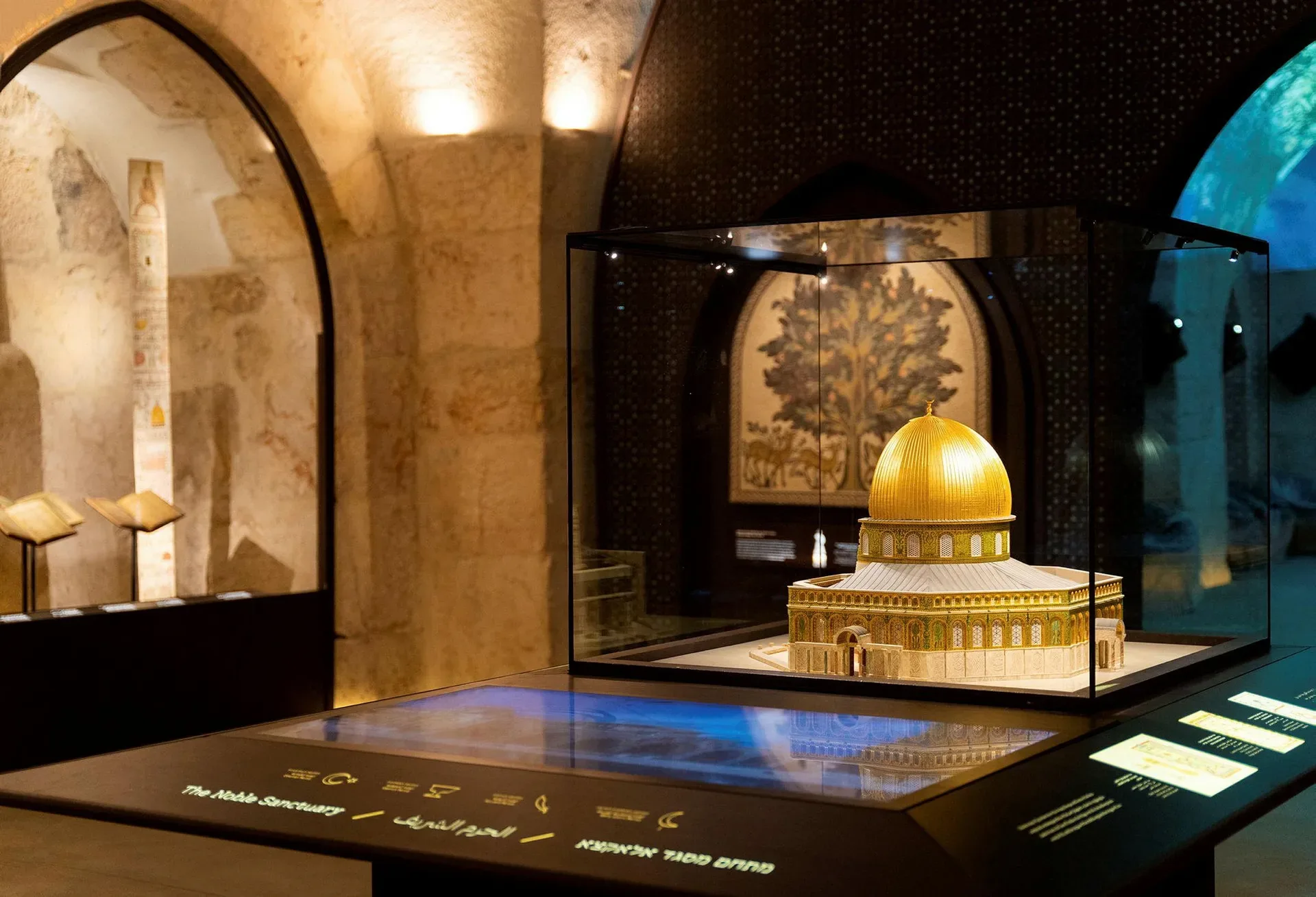 Tower of David
Jerusalem's history as exhibitions you walk through, with projection, touch and sound inside a historic landmark.
Tower of David
Jerusalem's history as exhibitions you walk through, with projection, touch and sound inside a historic landmark.
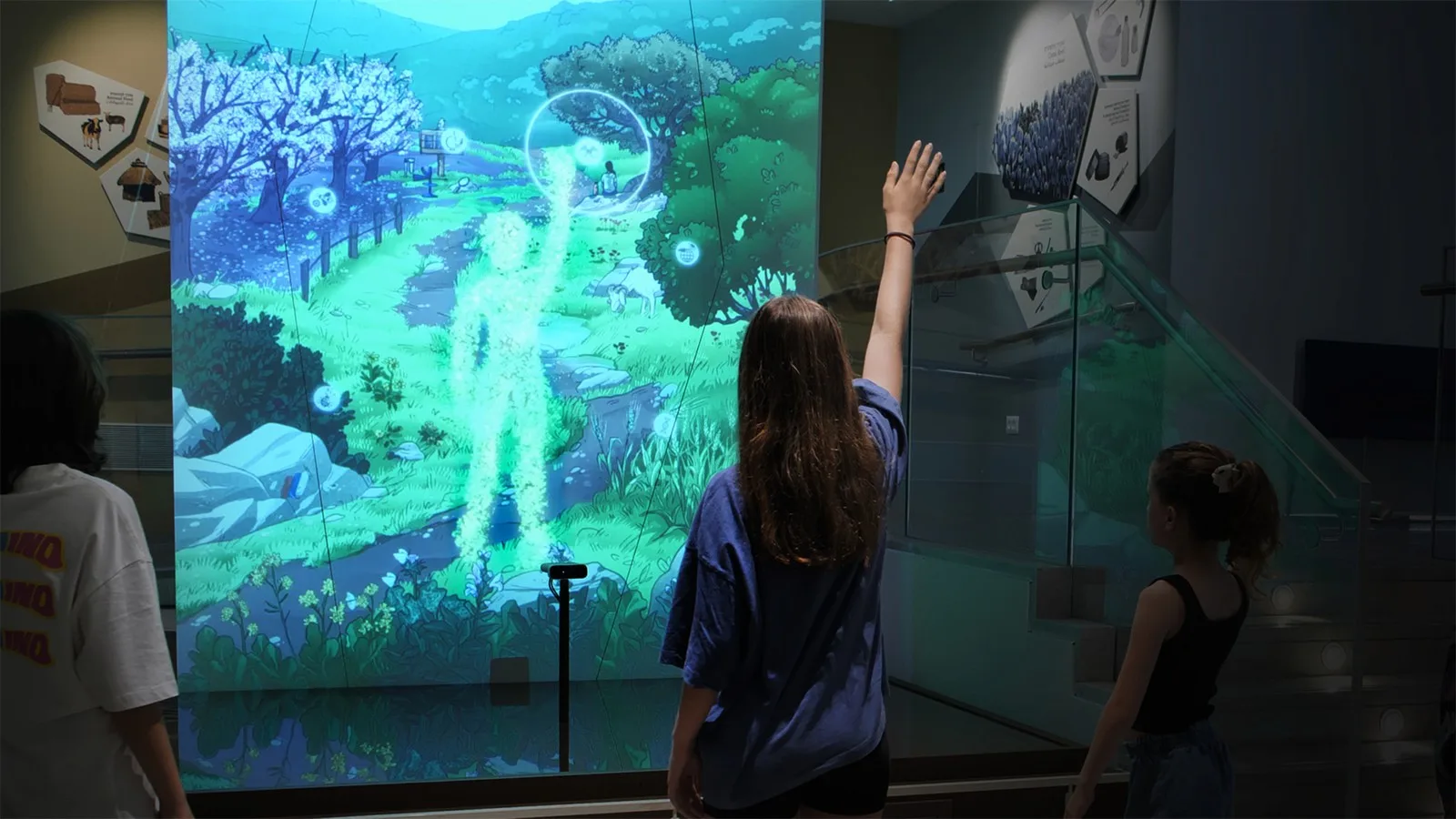 Museum of Natural History
Environmental science turned into something visitors explore hands-on, built with a multidisciplinary team.
Museum of Natural History
Environmental science turned into something visitors explore hands-on, built with a multidisciplinary team.
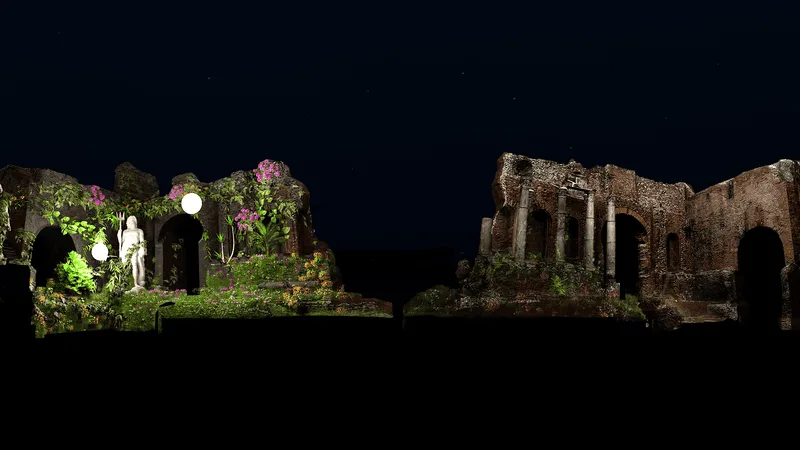 Taormina Sicily
Greek mythology projected onto a Sicilian landmark, mapped to the building's exact contours.
Taormina Sicily
Greek mythology projected onto a Sicilian landmark, mapped to the building's exact contours.
Past projects in this area. My role differed from project to project - each case study states my individual contribution.
Also relevant: National Library of Israel, Community Lights and the Kan 11 interactive election broadcast.
Settle the concept first
Good production makes the screens work. Deciding the concept first decides what belongs on them, and which moments work better as something other than a screen.
Installed work runs for years, in public, in front of visitors who did not choose to look. I can shape that concept from the start, or join an exhibition team with a direction already in place and contribute design, illustration and 3D.
Engagement
Independent engagements typically begin at ₪30,000. Full exhibition and installation projects, where a multidisciplinary team and technology partners are assembled around the work, are scoped separately. Related reading: what museums get wrong about technology.
Have an experience to shape?
Tell me about the space, the audience and what the visit should leave behind.